
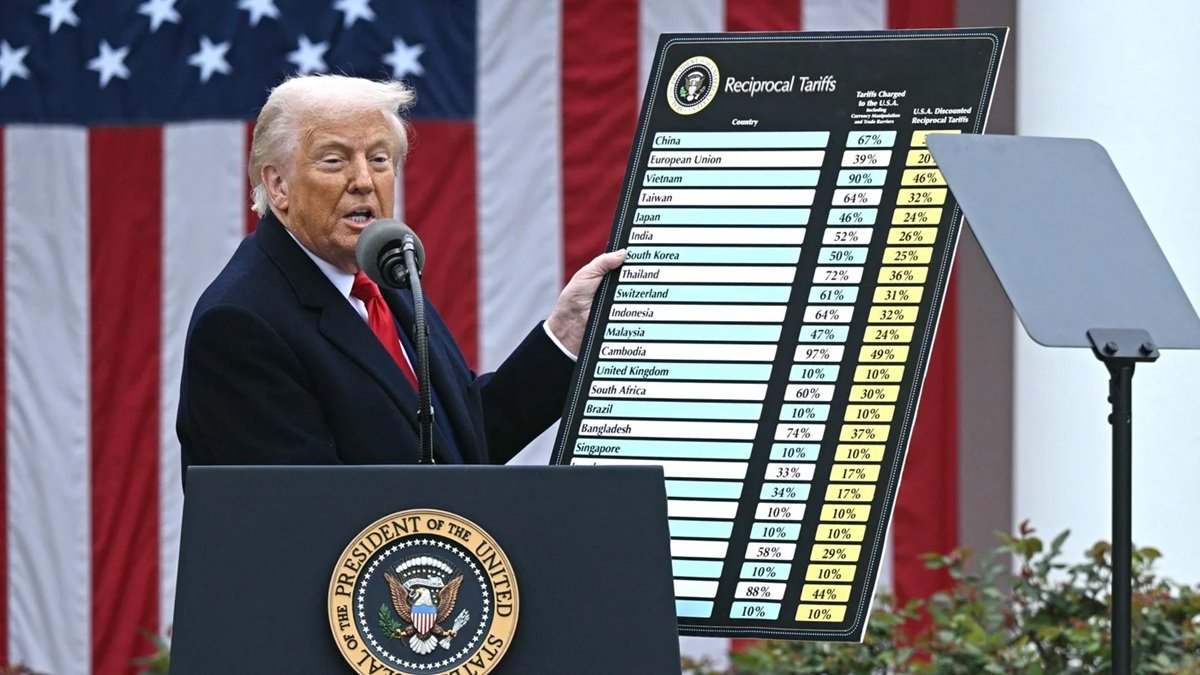
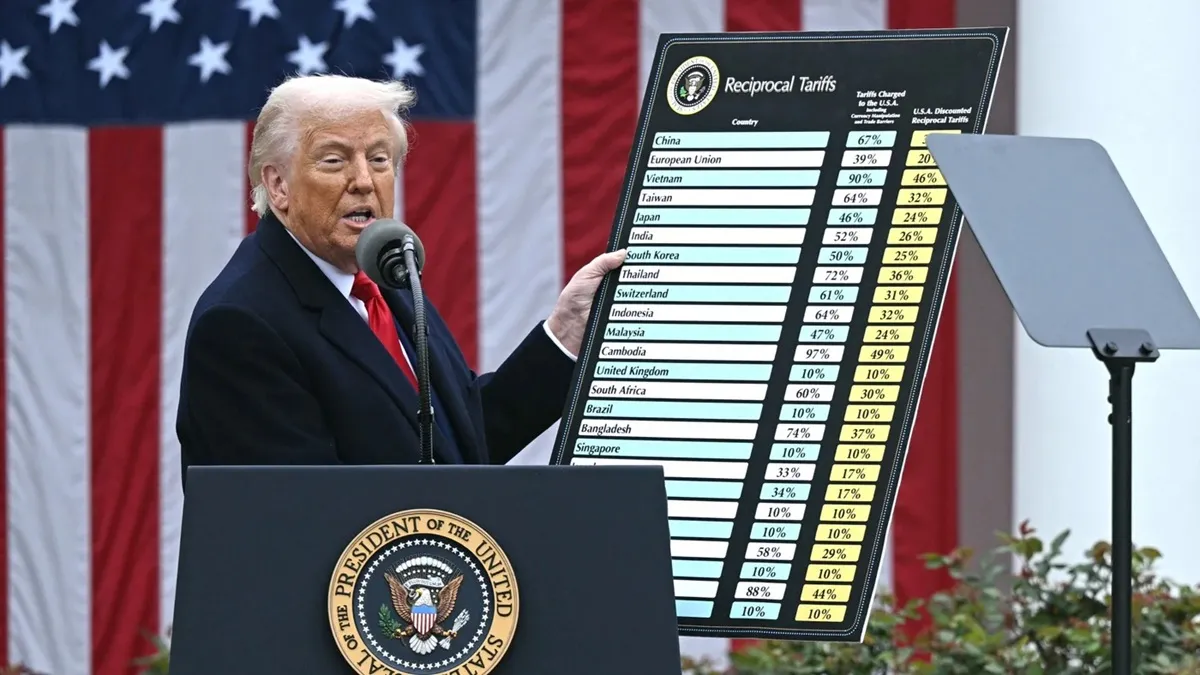
The US imposed a baseline 10% tariff in 2025, which applies to most countries. Special large import duties are imposed on some countries, depending on that country’s trade imbalance, trade policies and bilateral agreements. Before today, a total tariff of 50 percent was applicable on India, which has now come down to 43 percent. Along with India, the US also imposed 50% tariffs on Brazil, while many other developed countries have rates between 10–20%. Come, let us see here how much tariff is now applicable on which countries.
Tariffs imposed by America
|
|
US Tariff (%) |
| India | 43% (after decreasing from February 2) |
| China | 30% |
| european union | 15% (on some items) |
| Canada | 35% (outside USMCA) |
| Mexico | 25% (outside USMCA) |
| Iraq | 35% |
| Switzerland | 39% |
| myanmar | 40% |
| laos | 40% |
| Syria | 40% |
| kazakhstan | 27% |
| nicaragua | 18% |
| Pakistan | 29% |
| philippines | 17% |
| israel | 17% |
| Thailand | 36% |
| vietnam | 46% |
| bangladesh | 37% |
| Australia | 10% |
| norway | 15% |
| Baseline charges on other countries | 10% |
What does it mean to impose a tariff?
Imposing high tariffs on a country means that higher duties are being imposed on goods imported from that country. It has a direct impact on the prices of products, international trade and mutual relations between two countries. When the US or any other country imposes high tariffs on a particular country, the products coming from that country become expensive. This increases the costs of importing companies, the burden of which often falls on consumers as well.
Usually the step to increase tariffs is taken to create trade pressure, to protect domestic industries or for strategic reasons. Sometimes its objective is also to force the other country to change its trade policies. Imposing higher tariffs may provide relief to the domestic industry in the short run, but in the long run, trade may become costly, inflation and global tensions may increase.
Latest Business News