
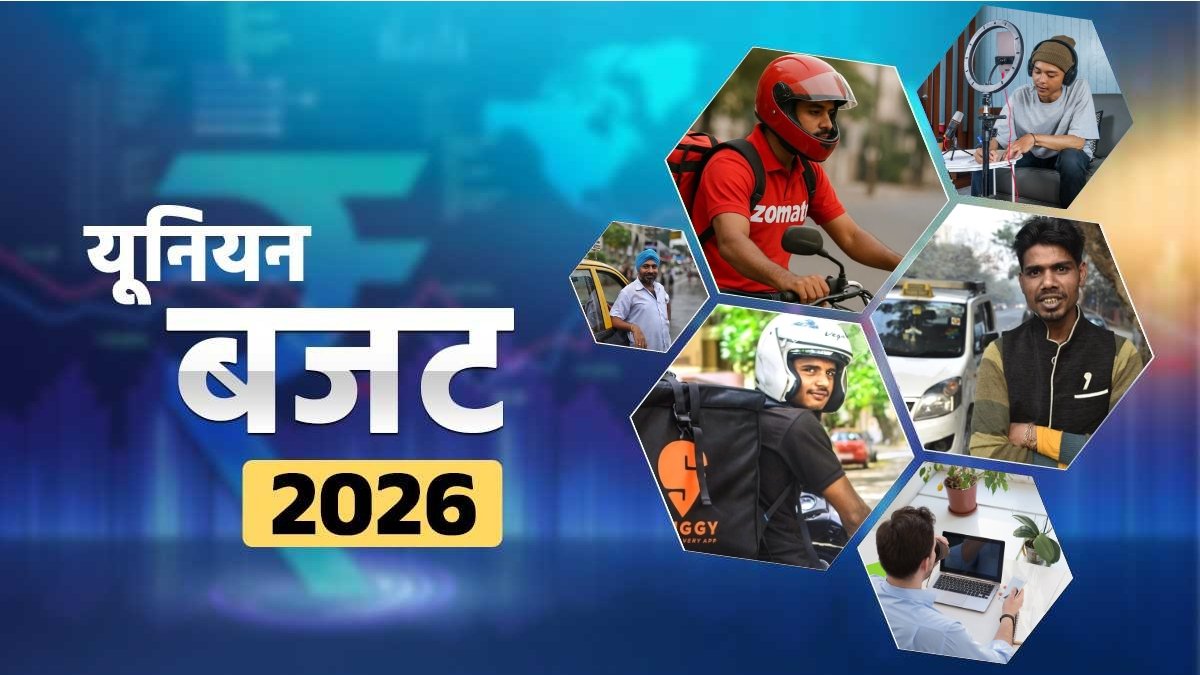

The country’s gig economy is expanding rapidly. Delivery partners, cab drivers, freelancers, content creators and millions of workers associated with digital platforms today depend on short-term and flexible work. But rising inflation, irregular earnings and adverse weather conditions have raised questions about their economic security. In such a situation, the eyes of gig workers are now fixed on Budget 2026, from which they expect not only relief but also permanent security.
Income crisis due to weather
In recent years, floods, heatwaves and sudden weather changes have hit the earnings of gig workers the most. If delivery partners or drivers working outside are unable to work even for a day or two, their income goes straight to zero. According to Ankur Indrakush, Founder, Plutas.AI, existing government insurance schemes mostly focus on post-loss compensation, while the need is for immediate income support. Experts believe that models like parametric climate insurance, which make automatic payments based on weather data, can provide timely relief to gig workers.
Youth need financial flexibility
The gig economy consists of a large number of young professionals who are continuously investing in skill upgradation, courses and career shifts. Abhimanyu Saxena, co-founder of Scaler, believes that tax relief, affordable education financing and steps to promote digital career pathways for the youth will be important in Budget 2026. This will enable young gig workers to invest in their future without financial pressure.
Trust in digital loan, but security is important
Today many gig workers rely on digital loans to manage cash flow. Shruti Aggarwal, co-founder of Stashfin, says that along with easy credit, consumer protection is equally important. The budget should focus on transparent rules, responsible lending and strong grievance redressal system. Also, there is a need to connect gig workers to the formal credit system through technology and alternative data.
Latest Business News