
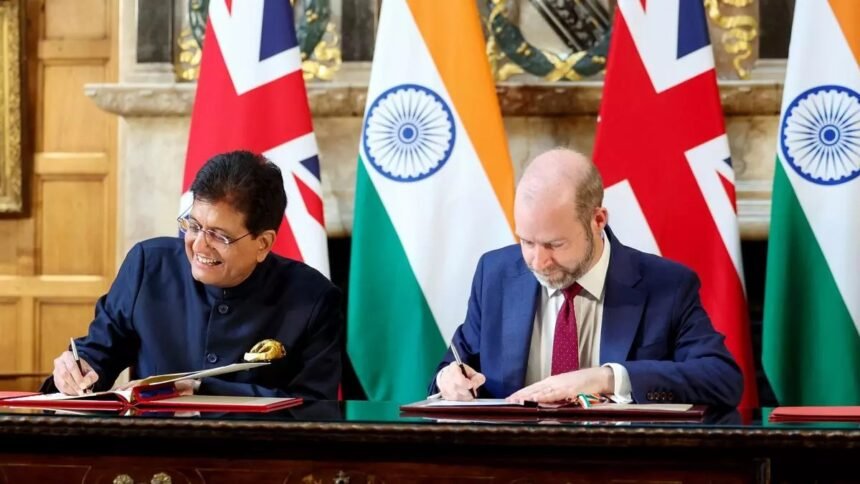
The Free Trade Agreement (FTA) signed between India and Britain in July last year may come into effect by the beginning of May. Officials said on Thursday that both sides are working to resolve some pending alliance issues, after which the agreement will be implemented. According to officials, the European Union has set a deadline of November for the approval (ratification) of its trade agreement with India. In such a situation, it is expected that this agreement can also be implemented this year.
Negotiations slowed down due to conflict
However, ongoing trade talks with Israel and the six Gulf Cooperation Council (GCC) nations—which include Saudi Arabia, the United Arab Emirates, Qatar, Kuwait, Oman and Bahrain—have reportedly slowed due to the ongoing conflict in the region. At the same time, regarding the proposed trade agreement between the United States and India, officials said that the process is ongoing, but any agreement depends on better market access (preferential market access) rather than infiltration.
Mother of All Deals
If India gets this benefit, only then this deal will move forward. On January 27 this year, India and the European Union had announced the completion of negotiations on a free trade agreement, which was called the “Mother of All Deals”. Under this, 93 percent of India’s exports will get duty-free access in this group of 27 countries, while luxury cars and wines coming from European countries will become cheaper in India.
India and Britain had signed a comprehensive economic and trade agreement. Under this, 99 percent of India’s exports will be able to enter the British market at zero duty, while the import duty on British products like cars and shops in India will be reduced. However, before this agreement can be implemented, the approval of the UK Parliament is necessary.
Signed on 24th July 2025
India and Britain formally signed the free trade agreement last year on July 24, 2025. This agreement is a historic step towards strengthening economic relations between the two countries. Under this, zero tariff (no customs duty) will be applicable on 99 percent of India’s exports to the British market. This will provide easy market access to Indian textiles, leather, footwear, jewellery, pharmaceuticals and other labour-intensive products in Britain.
Tariffs applicable in India on some major UK products and other goods will be reduced. If this happens, these products will become cheaper for Indian consumers. The agreement is designed to boost bilateral trade, create jobs and accelerate economic growth.