
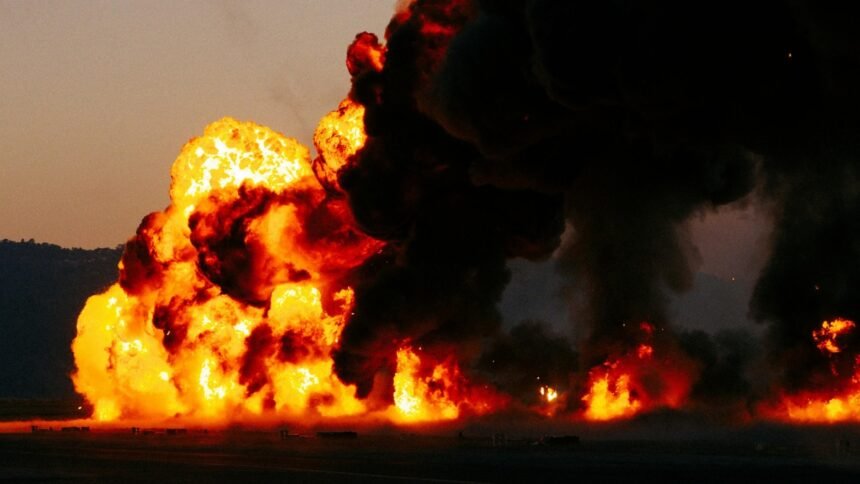
The fire of war that broke out in the Middle East has now reached the kitchens and factories of India. The missile attack by Iran on the world’s largest gas plant located in Ras Laffan, Qatar has shaken India’s energy security. After this attack, the gas supply from Qatar has come to a complete halt, causing a major fuel crisis in India. Experts believe that if this supply is not restored soon, there may be power cuts and industrial jams in many parts of the country.
20% of India’s gas supply stopped
India is heavily dependent on Qatar for its natural gas (LNG) needs. According to the latest data, 20 percent of India’s total gas imports have been directly affected due to this attack. In technical language, the daily supply of 47.4 MMSCMD (million metric standard cubic meters per day) has suddenly stopped. The Ras Laffan plant is Qatar’s main export hub, and its closure means the route for gas ships to India is currently closed.
Scissors may work on power and industrial sectors
In view of this huge shortage of gas, the Indian government has started taking precautionary measures. The first and biggest impact of gas shortage will be on power generation and fertilizer factories. The government has indicated that the supply to industries may be cut to save gas for domestic consumers (PNG) and vehicles (CNG). This will increase the cost of factories and have a negative impact on production.
Strait of Hormuz becomes a challenge
Due to increasing tension between Iran and Qatar, sea routes have also become unsafe. Movement of ships is on high alert due to war-like situation in the Strait of Hormuz. Indian government companies are now trying to buy gas through alternative routes and immediately from other countries (like America or Australia), so that the country can be saved from energy collapse.